East and Southeast Asia VC Funding Benchmarks
Angel, pre-seed, seed and Series A round sizes in East and Southeast Asia vs the US, from Crunchbase deals in 2022–2024 and the KPMG Venture Pulse Q2 2024.
Originally published in MondayVC Newsletter, Edition 13, August 19, 2024, on LinkedIn. Figures are as of 2024.
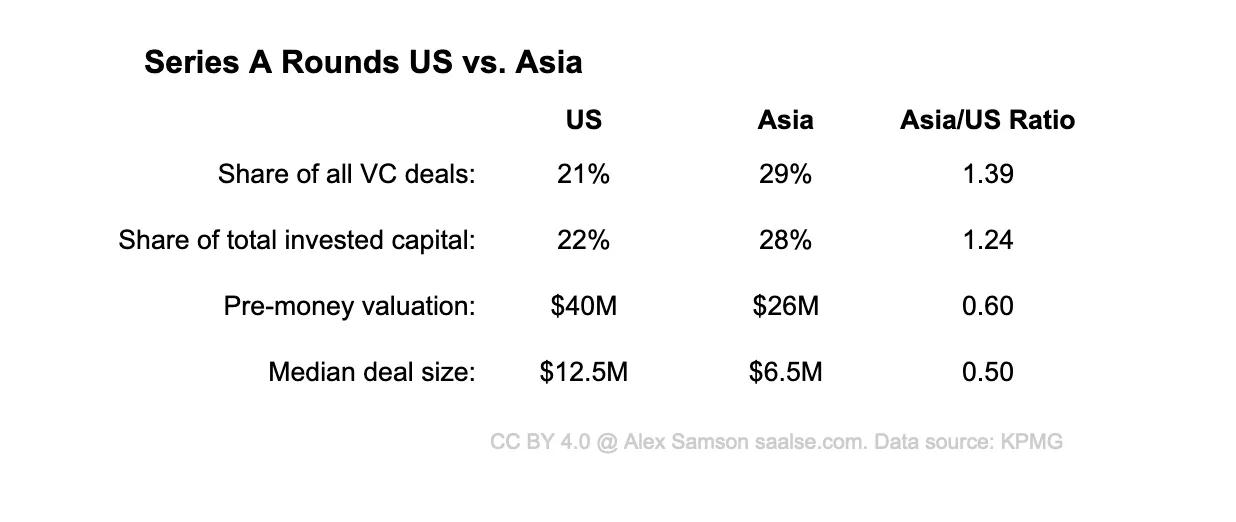
Key numbers: in Crunchbase deals from 2022 to August 2024, most pre-seed rounds in East and Southeast Asia were below $250K, against a $1.5M US median (Carta), and typically target $250K–$500K. Per KPMG, Asia's median seed round is $1.4M, roughly half the US benchmark, and Series A valuations and deal sizes are also about half of US levels.
Prior to my talk at the Founder Institute Hong Kong fundraising session, I dedicated some time to understanding how all VC metrics from my previous analyses, conducted for the US, apply to East and Southeast Asia (ESEA) to guide founders and investors.
To streamline the analysis, I focused on countries with a GDP above $100B.
Today, I’m sharing the first part, exploring early-stage funding round distribution and sizes based on Crunchbase deal data from 2022 to August 2024. Keep in mind that Crunchbase reflects approximately 30% of the real market, but it's a sufficient sample for comparison analysis.
Funding Stage Distribution#
First, I checked how different funding stages are balanced based on deal distribution, sorting them in comparison to the US benchmark. For founders, this provides insight into which locations are more favorable for their stage of fundraising, and for emerging investors, it can indicate where there is less competition for earlier opportunities.
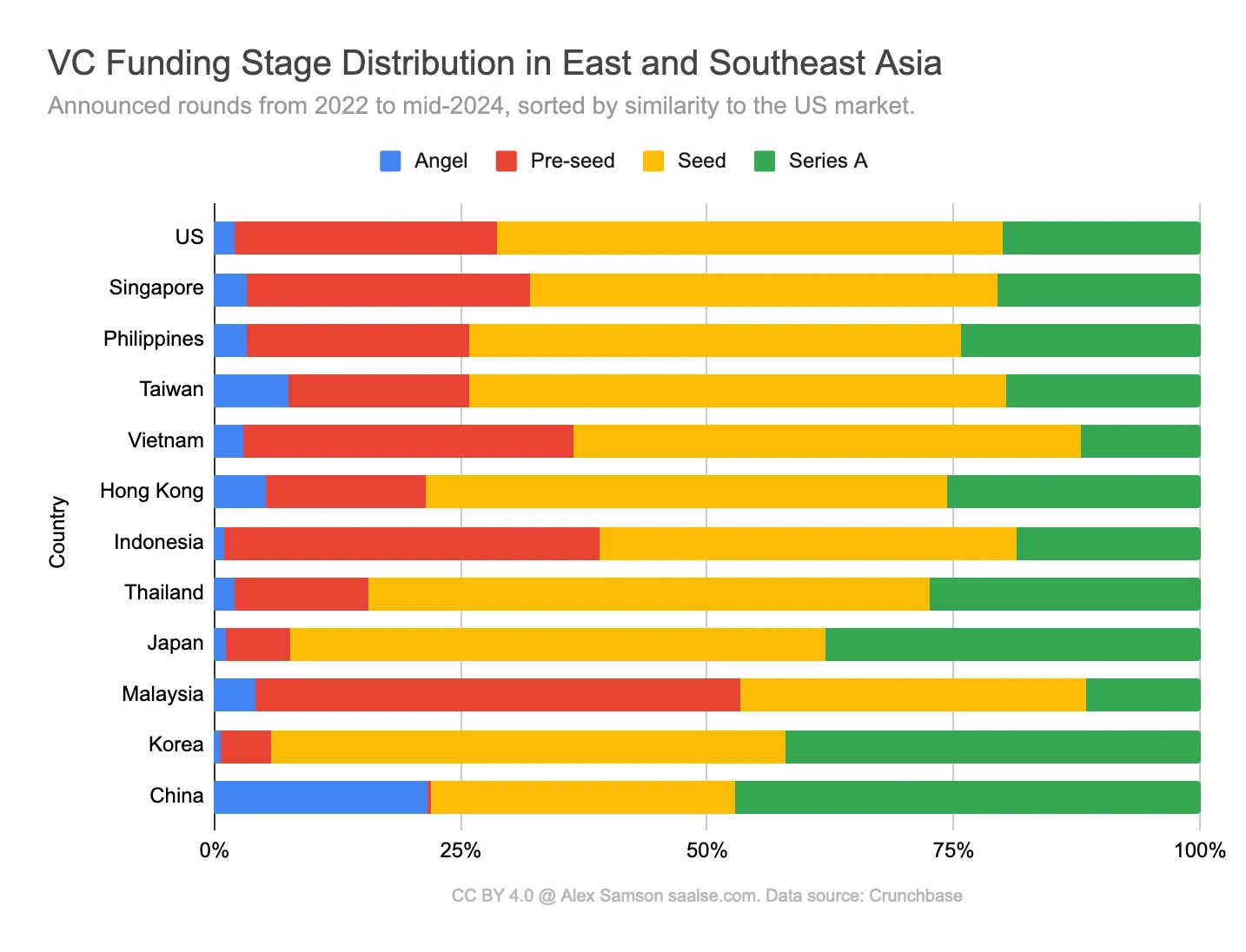
China stood out with the highest percentage of angel rounds and a significant decline in pre-seed deals. Interestingly, this trend doesn't have a clear explanation when looking at the absolute number of deals in that stage.
Angel Rounds in East and Southeast Asia#
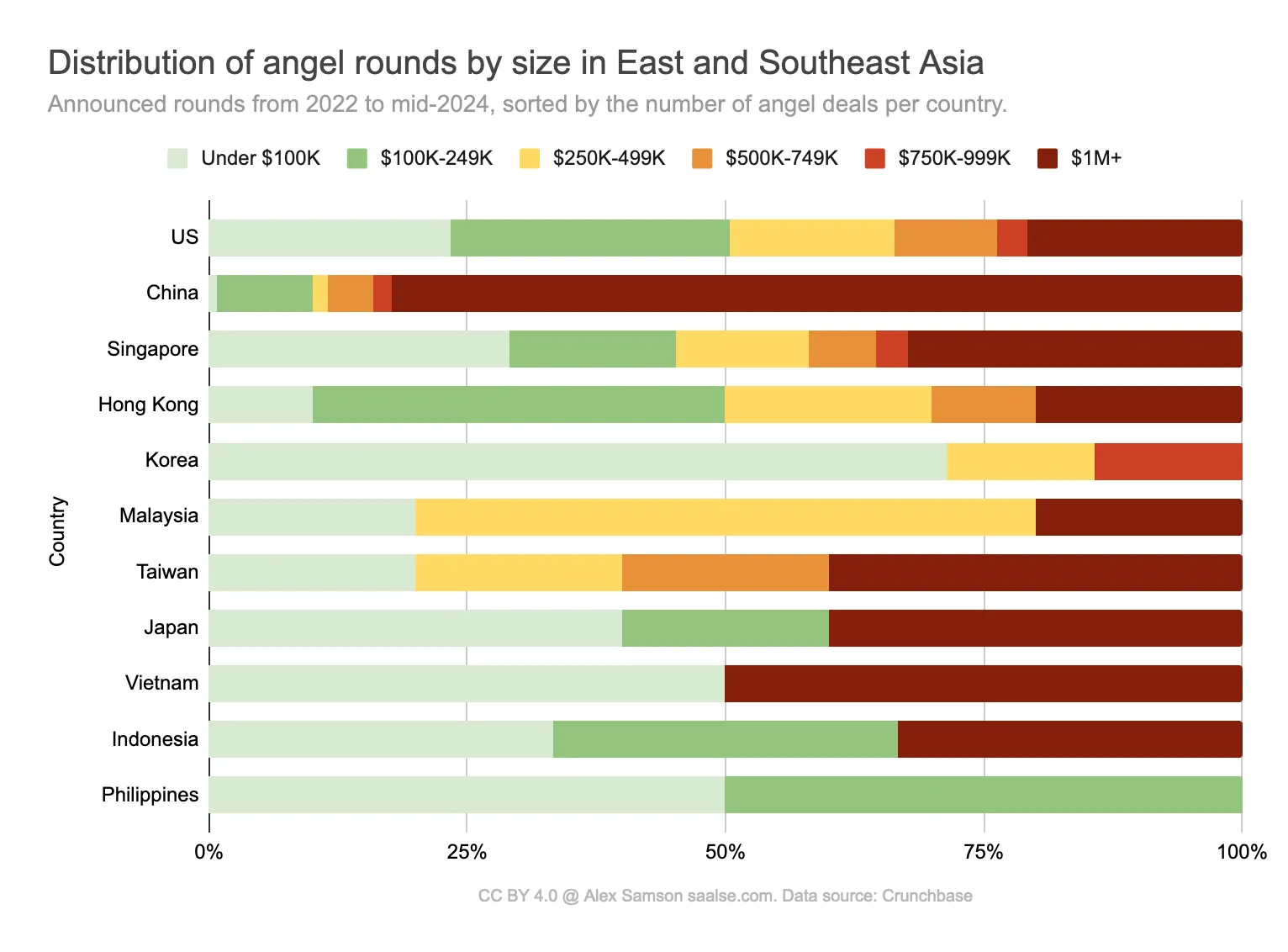
Angel rounds above $1 million typically aren’t prior to pre-seed, so the explanation is that these were likely later rounds or bridge rounds led by super angels or syndicates, although Crunchbase labeled them as angel rounds. Meanwhile, the US shows a more balanced distribution, reflecting a more mature angel investment culture.
In East and Southeast Asia (ESEA), the dataset for angel rounds is extremely small, indicating that this investment approach is just beginning to develop in the region. Alternatively, pre-seed rounds might still be relatively small in size, making them accessible to individual investors.
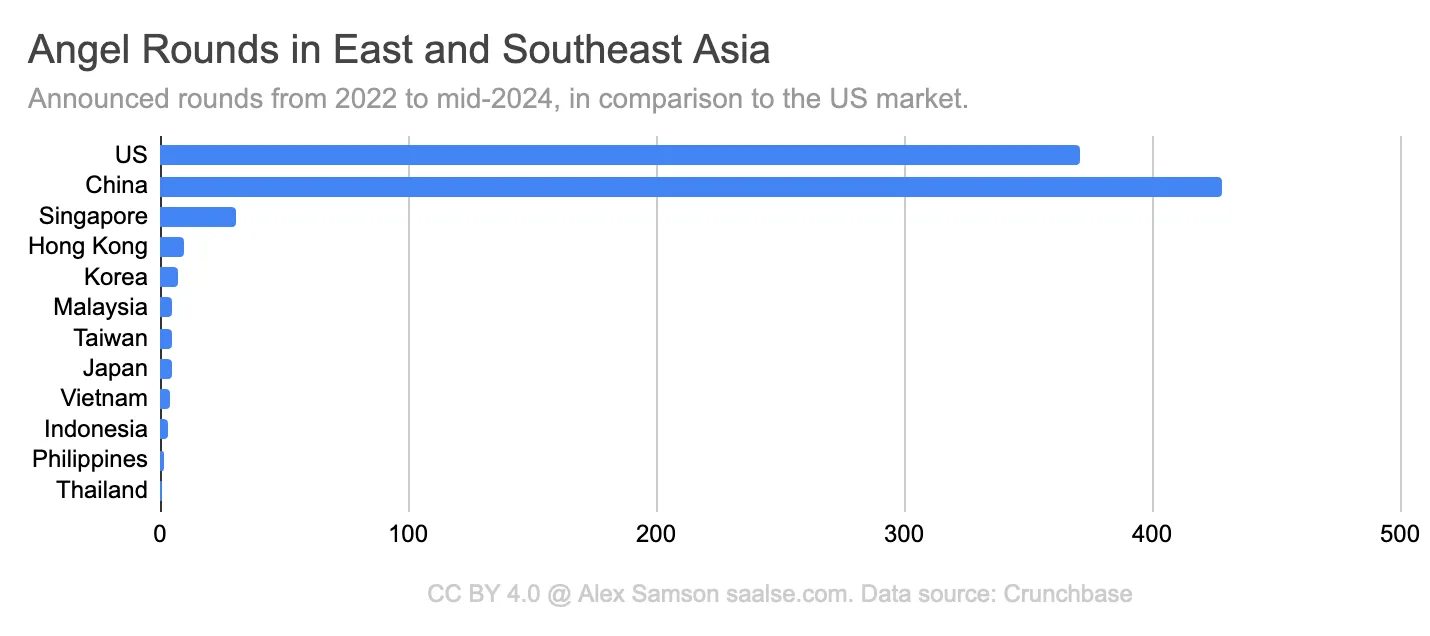
If you're looking for initial funding, head to China, Singapore, Hong Kong, or Korea. If you're looking to support founders with smaller checks, Thailand, the Philippines, Indonesia, Vietnam, and Japan are your best bets.
I also cross-checked with the KPMG Venture Pulse Q2 2024 report, based on more complete PitchBook data. However, it combines all Asian countries, where India and the Middle East could affect the conclusions. It provides a different view on angel round composition.
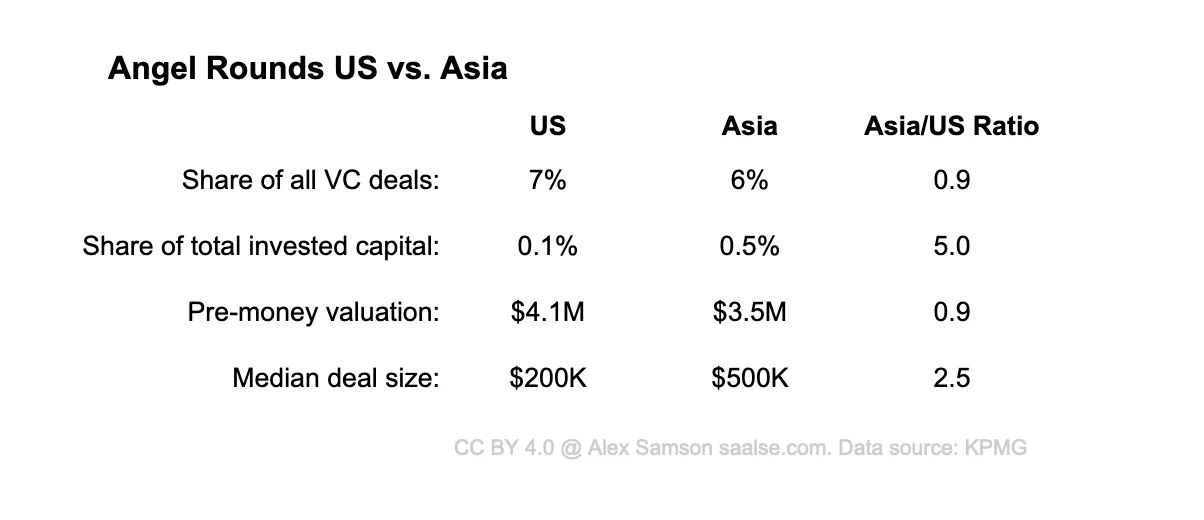
This data shows that Asian investors dedicate significantly more capital and larger check sizes in angel rounds compared to US investors. However, smaller check sizes in the US could indicate a more widespread adoption and greater risk tolerance at the idea stage.
It could also reflect small dataset errors due to the relatively low angel activity in Asia.
Interestingly, valuations for the earliest stage startups are quite close, despite the average 2x difference in the cost of building and launching a startup.
Pre-Seed Rounds in East and Southeast Asia#
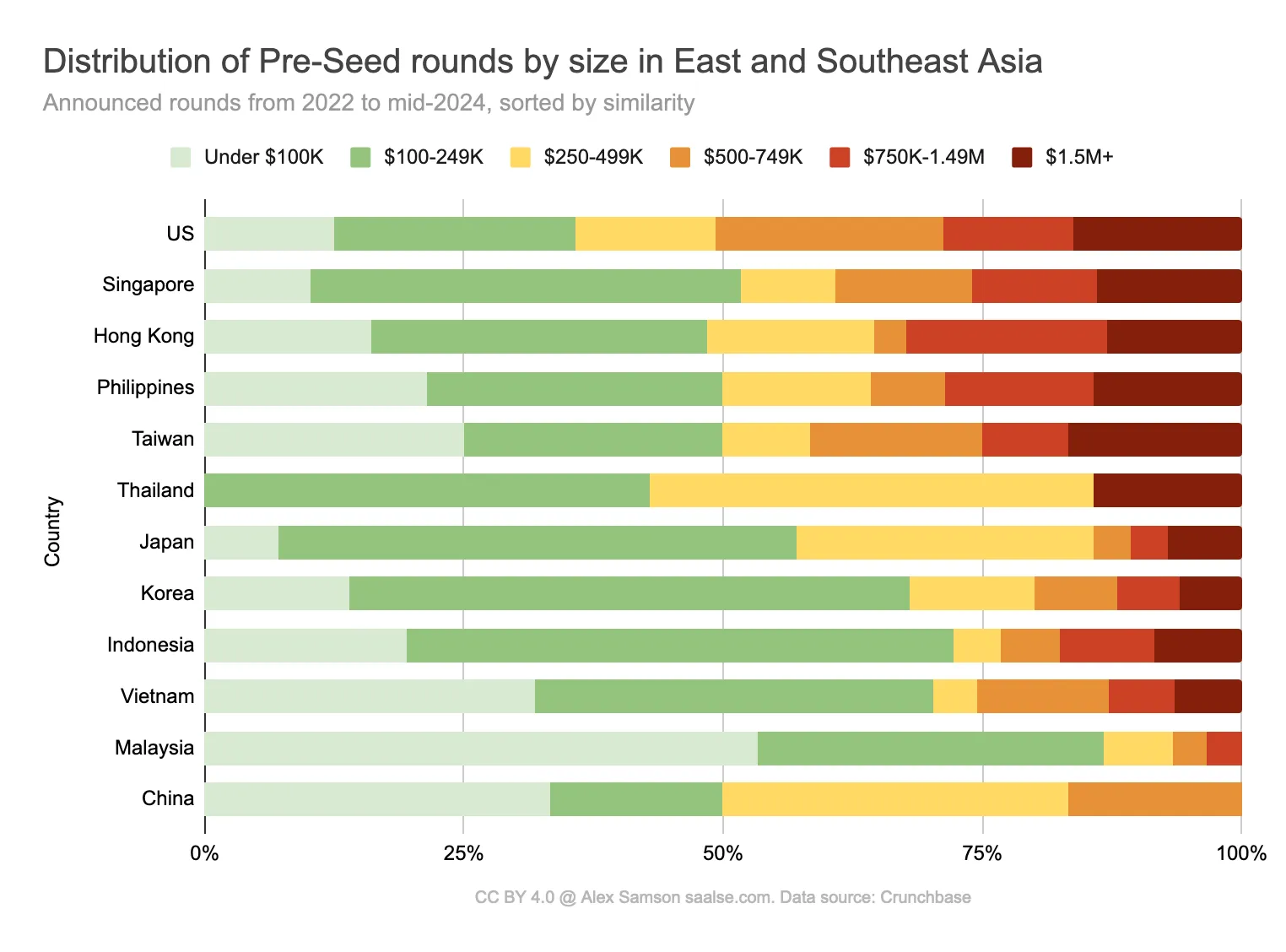
Pre-seed rounds dominate in the lower tier, below $250K across the ESEA region, while the recent US pre-seed benchmark median is $1.5M, according to Carta. That’s a 6x difference 🤔
I believe $250K is a normal size for the nature of pre-seed, while the US market might be inflated due to higher business costs, competition, and the dominance of deep tech, particularly in biotech, which demands larger checks.
The $250K pre-seed size could also explain why the angel segment remains relatively small in ESEA.
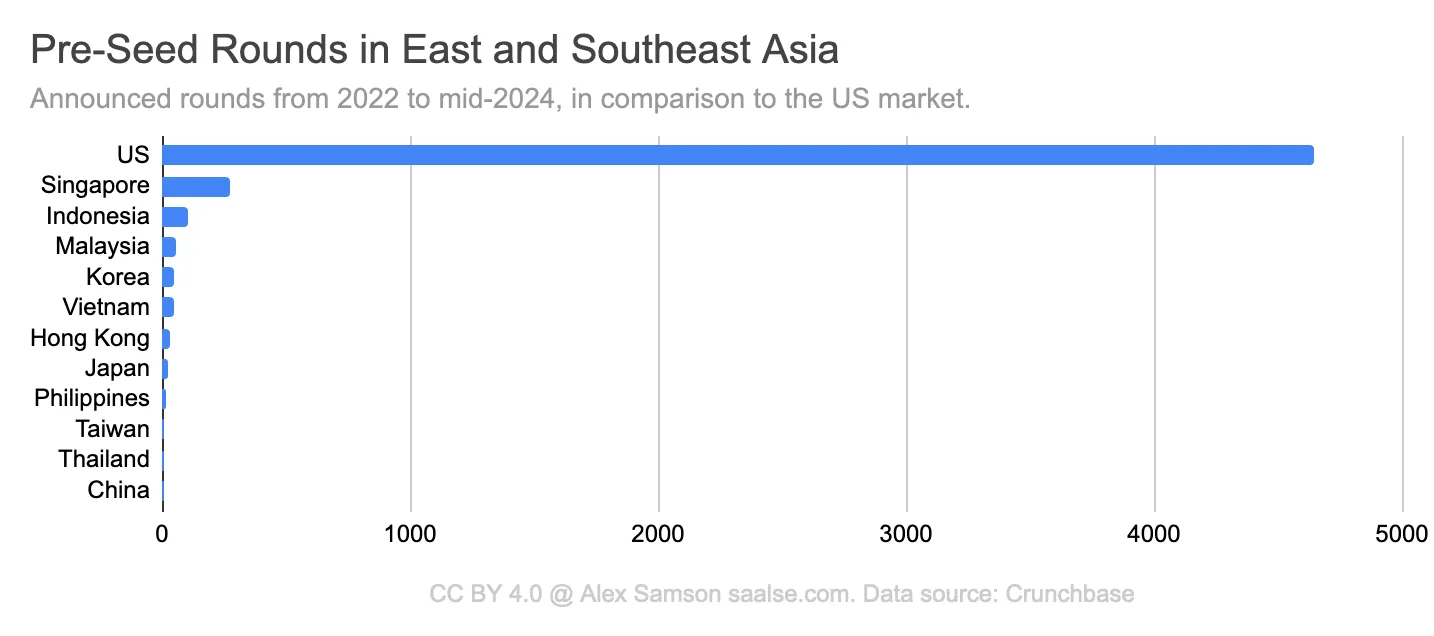
And compared to the US pre-seed market, the region’s dynamic is much smaller.
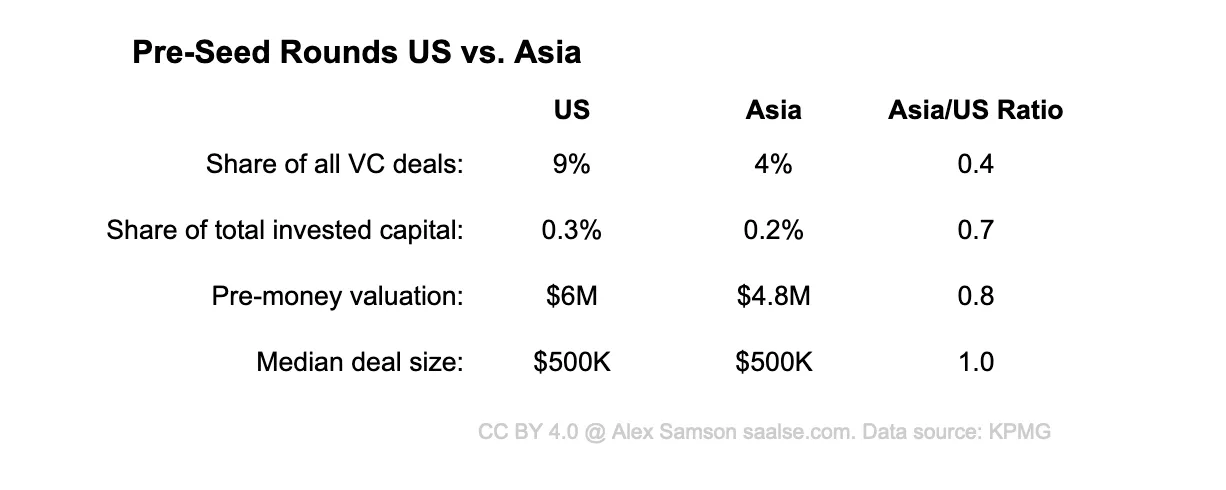
KPMG reports for the whole Asia region show slightly different numbers, with equal median deal sizes and similar valuations. Based on both sources, we can say that pre-seed rounds in ESEA typically target between $250K and $500K.
Seed Rounds in East and Southeast Asia#
While the US seed round benchmark median is $3M, some countries in East and Southeast Asia (ESEA) are closer to this figure, while others are significantly lower, regardless of their economy or population size. In Korea and Japan, half of seed rounds are below $1 million, and Malaysia has no seed deals above $5 million, showing the smallest seed rounds in the region.
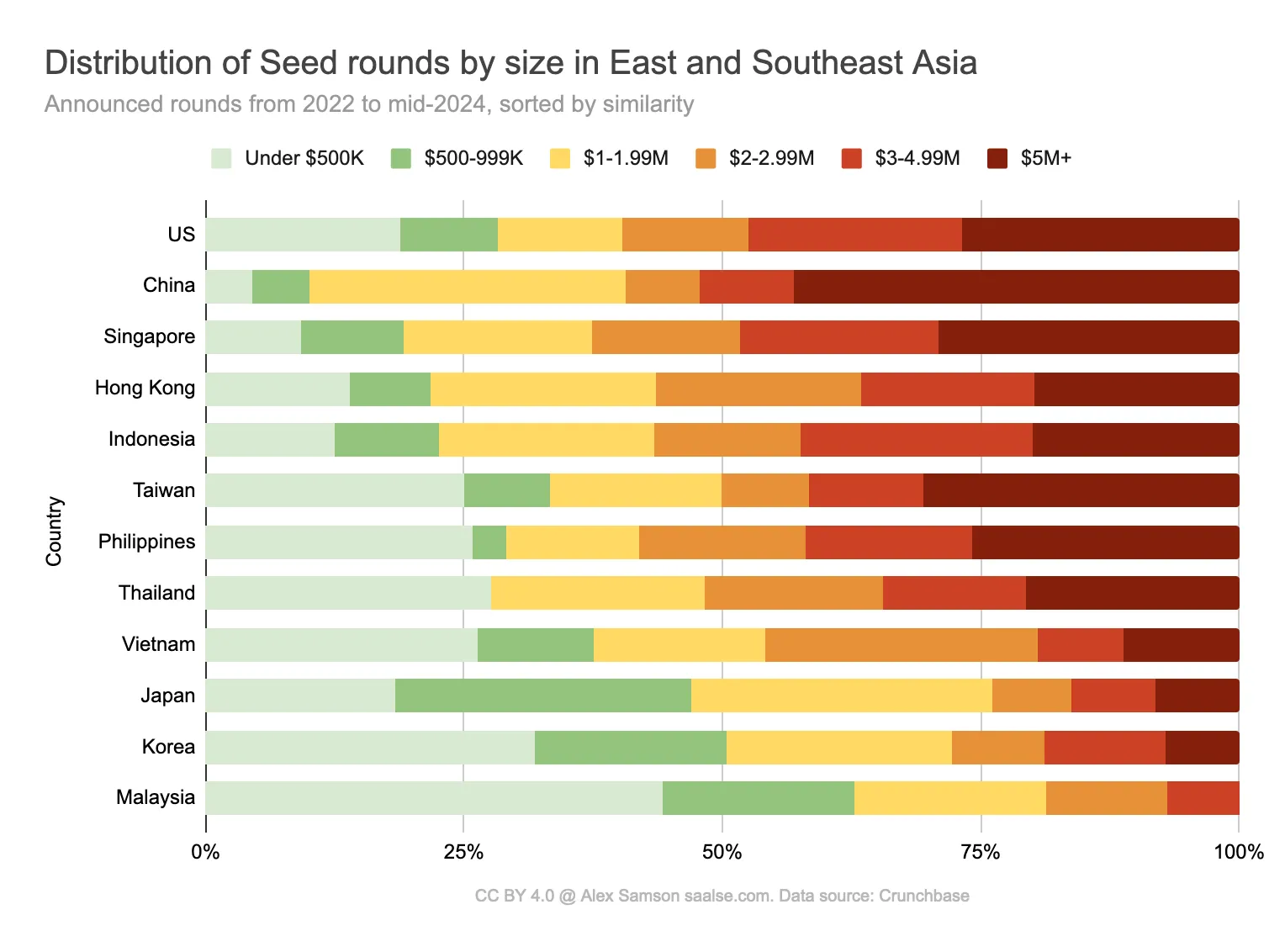
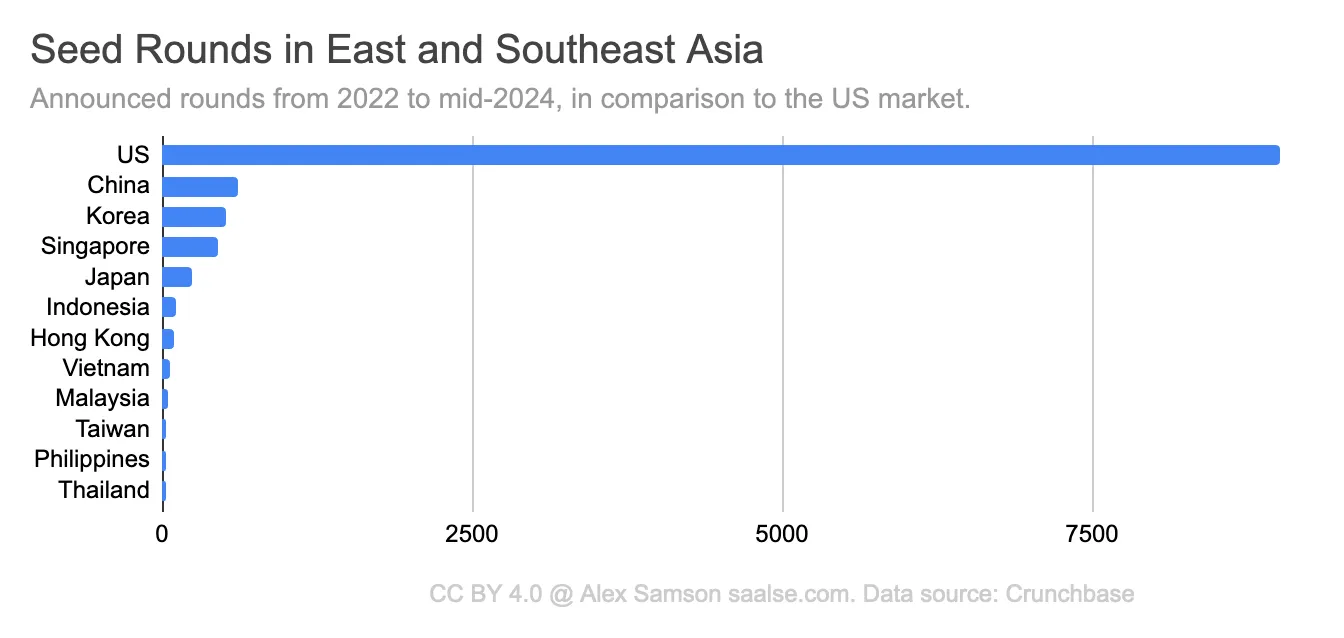
Seed rounds are becoming more popular here than angel or pre-seed, but each country still remains below 10% of the US market size in terms of deal volume.
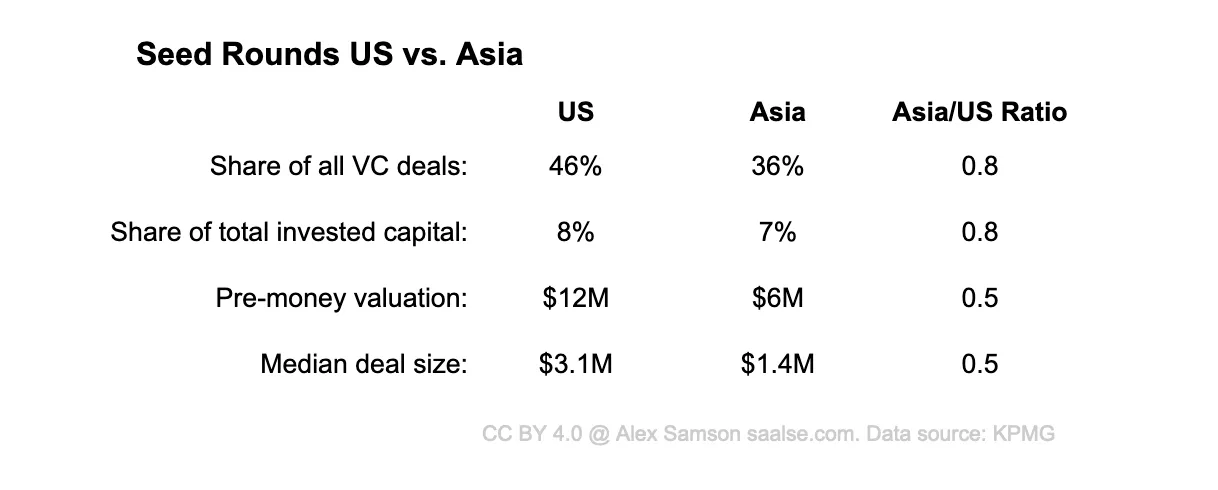
The KPMG report for all of Asia shows a share of seed deals and invested capital closer to that of the US. However, starting from the seed stage, there’s a 50% decline in startup valuations in Asia, with a median valuation of $6.1M. This is reflected in the median deal size, which is $1.4M, roughly half of the US benchmark.
Series A in East and Southeast Asia#
In Series A funding, two distinct groups emerge: one with distributions close to the US, and another with countries that deviate significantly. Interestingly, the first group includes a mix of economically diverse nations. In contrast, Korea and Japan, despite their advanced economies, have notably smaller Series A rounds.
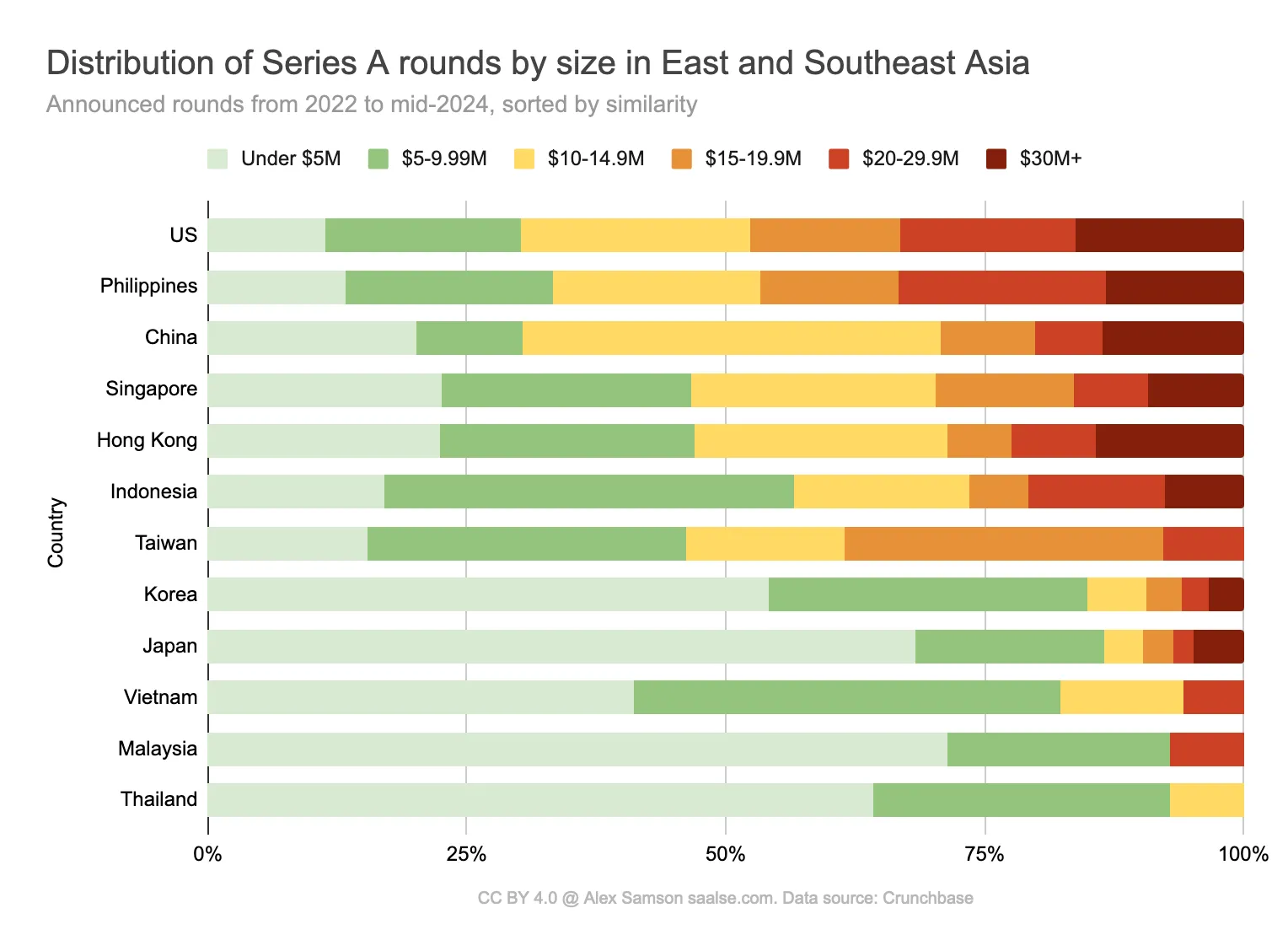
It's surprising that Korea and Japan rank in the top five for Series A deal volume, yet they lag behind in terms of round size.
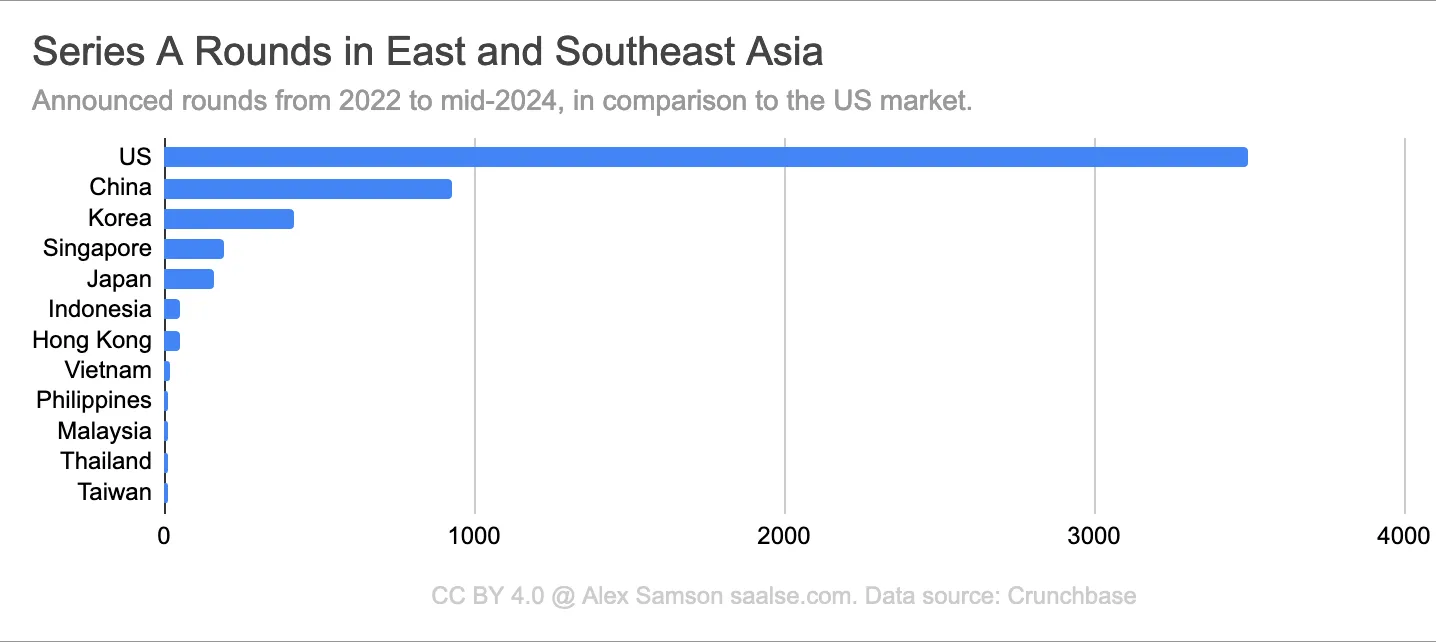
When compared to the US, earlier stages are less popular in the region. Local investors seem to favor less risky, later-stage investments in more validated startups.
The KPMG report highlights a trend in Asia to allocate early capital toward more proven stages. The ratio of investment in Series A compared to (pre-)seed is higher, indicating that the capital not spent in early stages shifts to Series A. Valuation and median deal sizes in Series A are about half of US benchmarks, which aligns with the cost differences in doing business in these regions.
Conclusions#
In simple terms, East and Southeast Asia VC funding benchmarks are generally about half of those in the US. However, there are many exceptions, and these differences don’t always correlate with the economic strength or market size of each country. I believe historical business practices and varying tech investment cycles also play a role. Therefore, any decision regarding where to invest or fundraise in this region requires thorough and precise analysis.
Related: Unicorns by Region: US vs EU vs ASEAN, Edition 17, on why Southeast Asia has 22x fewer unicorns than the US.
Raising a pre-seed or seed round? I advise early-stage founders on fundraising and the pitch: Startup Advisor.
Previous in MondayVC Newsletter: Edition 12, Angel Rounds.
Next in MondayVC Newsletter: Edition 14, Finding VC Specialization.